What is SEO?

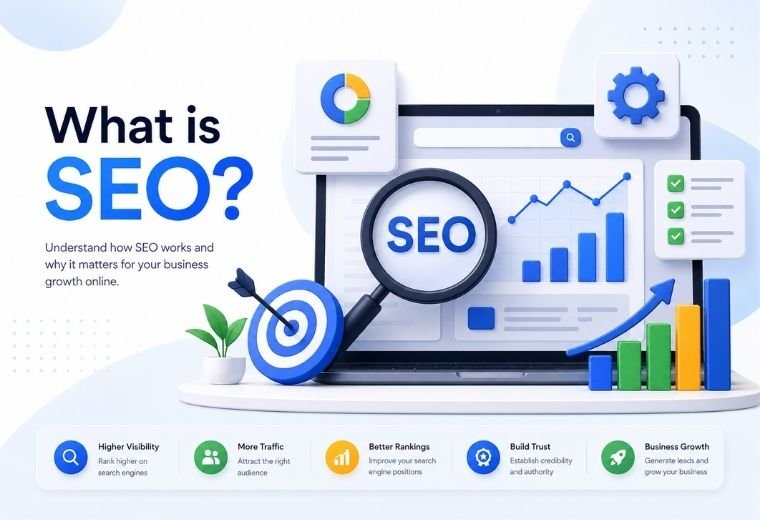
Quick answer: SEO (Search Engine Optimization) is the process of making your business show up higher on Google when people search for what you sell. It’s free traffic — no ad spend required. Done right, SEO brings customers to your door consistently, month after month, without paying for every click.
Table of Contents
Think about the last time you needed a plumber or a nearby clinic. You probably opened Google and typed something like “plumber near me” or “best dental clinic in Pune.” You clicked one of the first results. The business that appeared there? They didn’t get lucky. They used SEO.
That’s the core of it. SEO is about making sure your business shows up when your customers are already looking for you. No chasing, no cold calls. Just your business, right there at the top, when the intent to buy is highest.
This guide explains what SEO is, how it works, and what a small business owner in India can actually do about it — without needing a tech background or a big budget.
What Does SEO Stand For — and What Does It Actually Mean?
SEO stands for Search Engine Optimization. Break that down:
- Search Engine = Google (mostly), or Bing, Yahoo
- Optimization = making something better for a specific purpose
Put it together: SEO means making your website better so Google ranks it higher in search results.
When someone searches “best salon in Jaipur,” Google scans thousands of websites and decides which ones to show first. SEO is how you tell Google: “My business is relevant, trustworthy, and worth showing.”
Why Does SEO Matter for Indian Small Businesses?
Here’s the reality. Most people don’t scroll past the first page of Google results. If your business isn’t there, potential customers find your competitor instead.
A doctor’s clinic in Dehradun, a kirana store in Nagpur, a coaching center in Hyderabad — all of them have customers searching for them online right now. The question is: are those customers finding you, or finding someone else?
SEO levels the playing field. A well-optimized small business website can outrank large companies with bigger budgets — because Google rewards relevance and quality, not just money.
How Does Google Decide Who Ranks First?
Google uses hundreds of signals to rank websites. You don’t need to know all of them. But three main factors drive most of it:
1. Relevance — Does Your Content Match What People Search For?
If someone searches “physiotherapist in Bangalore,” Google looks for websites that clearly talk about physiotherapy services in Bangalore. The more clearly your website addresses the search, the more relevant it appears.
This is why keywords matter. Keywords are the exact words your customers type into Google. Your website needs to include those words — naturally, not stuffed in awkwardly — so Google connects your content to the right searches.
2. Authority — Does Google Trust Your Website?
Trust is built over time. Google looks at how many other websites link to yours (called backlinks), how long your site has been active, and whether other trusted sources reference your business.
A local restaurant with positive Google reviews and mentions in local food blogs will rank higher than a newer restaurant with no online presence.
3. User Experience — Is Your Website Easy to Use?
Google wants to send people to websites that work well. If your site loads slowly, doesn’t work on mobile, or confuses visitors, Google will rank it lower.
Speed, mobile-friendliness, and clear page structure all count.
What Are the Main Types of SEO?
SEO isn’t one thing. It covers several areas, each important in its own way.
| Type of SEO | What It Covers | Example |
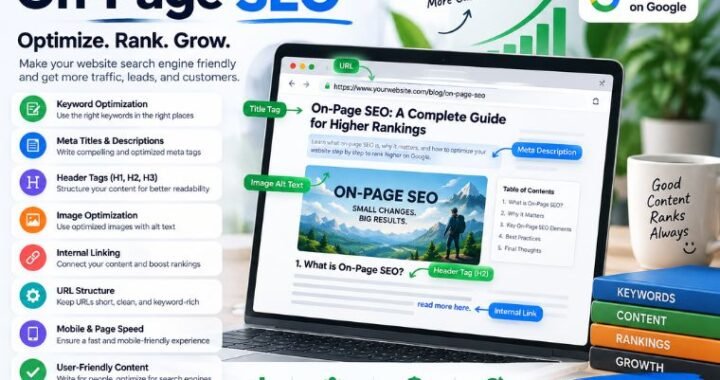
| On-Page SEO | Content, keywords, headings, page titles | Writing a page titled “Best Cake Shop in Chennai” |
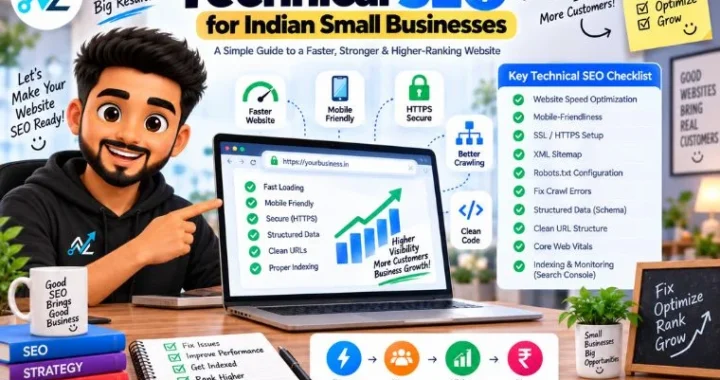
| Technical SEO | Site speed, mobile design, structure | Making your site load in under 3 seconds |
| Local SEO | Google Maps, “near me” searches, local reviews | Showing up when someone searches “gym near me” |
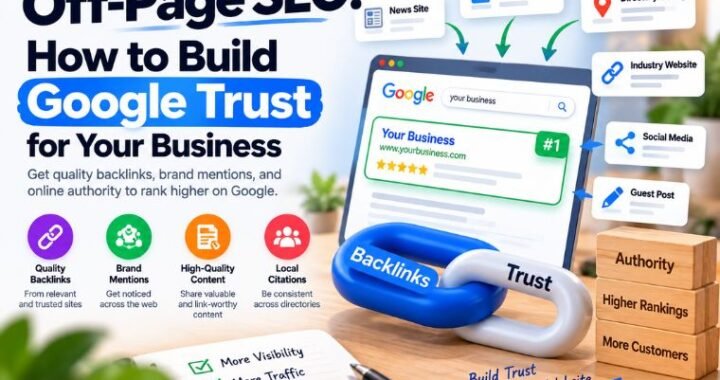
| Off-Page SEO | Backlinks, reviews, mentions | Getting listed in Justdial or local news sites |
| Content SEO | Blog posts, FAQs, guides | Writing helpful articles your customers search for |
For most small Indian businesses, Local SEO is the highest priority. Most of your customers are nearby. They search with “near me” phrases or city names. Local SEO gets you found by them first.
SEO vs. Google Ads — What’s the Difference?
This is a common question. Here’s the short answer:
- Google Ads = you pay for every click. Stop paying, stop showing up.
- SEO = you invest time and effort upfront. Results build over time and keep coming even when you’re not actively spending.
Neither is wrong. Many businesses use both. But for long-term, affordable visibility, SEO is the smarter investment for small businesses with limited budgets.
If you want fast results right now, Google Ads can deliver traffic within days. If you want steady, free traffic that grows month after month, SEO is the foundation you need.
What Does an SEO Strategy Actually Look Like?
Here’s a simple, practical breakdown of what SEO involves:
Step 1 — Keyword Research
Find the exact words your customers use to search for your product or service. A salon owner in Lucknow might target: “bridal makeup in Lucknow” or “hair spa near Hazratganj.”
Use NayaLogic’s free LSI Keyword Generator to discover related keywords for your business — no technical skills needed.
Step 2 — Optimize Your Website Pages
Each page on your website should clearly target one keyword. Your page title, headings, and content should all reflect what customers are searching for.
A useful free tool: NayaLogic’s Meta Title Generator helps you write SEO-friendly page titles in seconds.
Step 3 — Set Up and Optimize Your Google Business Profile
This is critical for local businesses. Your Google Business Profile is what shows up on Google Maps. Add your address, phone number, opening hours, photos, and encourage customers to leave reviews.
NayaLogic’s Google Business Profile service handles the full setup and optimization for you.
Step 4 — Create Helpful Content
Write blog posts, FAQs, and guides that answer questions your customers ask. A physiotherapist could write “5 exercises for lower back pain.” A salon could publish “How to care for colored hair in Indian summers.” Each piece of content is a new opportunity to rank on Google.
Step 5 — Build Local Authority
Get listed on local directories (JustDial, IndiaMart, Sulekha). Earn Google reviews from real customers. Partner with local bloggers or community groups. Each mention builds your credibility in Google’s eyes.
Step 6 — Track and Improve
SEO is not set-and-forget. Check your rankings, watch which pages bring traffic, and keep updating your content. Google rewards fresh, accurate information.
How Long Does SEO Take to Show Results?
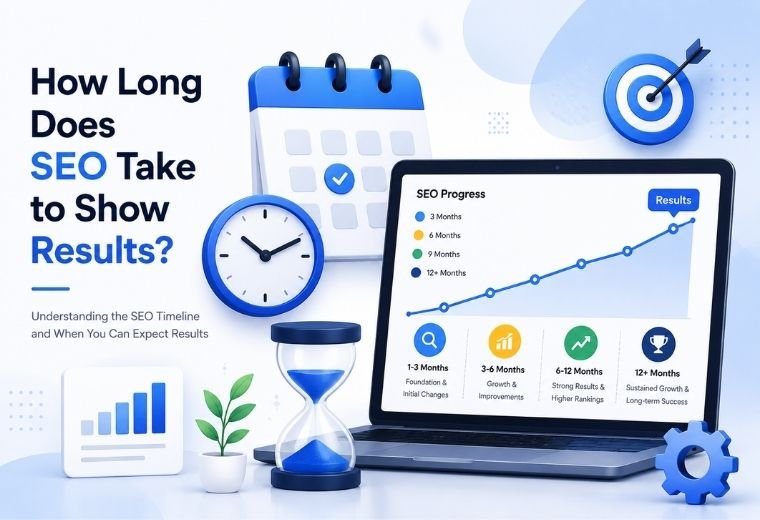
Be realistic here. SEO is not an overnight fix. Most businesses start seeing noticeable results within 3 to 6 months. Some competitive markets take longer.
This is the trade-off: SEO takes patience upfront, but the results compound. A page that ranks well today can bring customers for years. That’s very different from ads, which stop the moment you stop paying.
The best time to start SEO is now. Every month you wait is a month your competitors are pulling ahead.
Is SEO Right for Your Business?
Choose SEO if:
- You want long-term, sustainable online visibility
- You’re targeting local customers in a specific city or area
- You have a service or product that people actively search for
- You want to reduce dependence on paid ads over time
Combine SEO + Google Ads if:
- You need immediate traffic while SEO builds up
- You’re launching a new business or service
- You’re running a seasonal promotion
For clinics, salons, restaurants, coaching centers, and local service providers, NayaLogic’s SEO service is built specifically for this — affordable, managed for you, with no setup fee.
What Makes NayaLogic’s SEO Different?
NayaLogic is not a generic global tool. It’s built for Indian businesses, with Indian examples, ₹-based pricing, and an understanding of how local markets work.
Plans start at ₹2,999/month. No setup fee. No confusing dashboards. NayaLogic’s team handles your SEO — keyword research, page optimization, local listings, content — so you can focus on running your business.
You don’t need to understand the technology. You just need to see more customers walk through your door.
Start Getting Found on Google
SEO works. It’s not magic — it’s a system. Build the right foundation, target the right keywords, keep your content helpful, and Google will send you customers consistently.
Your competitors are already doing it. The sooner you start, the sooner you pull ahead.
Book a free demo with NayaLogic today. See exactly how SEO can work for your specific business — whether you run a salon, a clinic, a restaurant, or a retail shop. No commitment, no setup fee, no jargon.
Frequently Asked Questions
What is SEO in simple words?
SEO is the process of making your business show up higher on Google when people search for what you sell. It’s free traffic — you don’t pay for every click like you do with ads. Good SEO means more people find your business online without you spending money on advertising every day.
How much does SEO cost for a small business in India?
SEO costs vary depending on who you hire. NayaLogic’s SEO plans start at ₹2,999/month with no setup fee. This includes keyword research, page optimization, and local listing management — all done for you.
How long does it take for SEO to work?
Most businesses see meaningful results within 3 to 6 months. Competitive markets may take a little longer. SEO is a long-term investment: the results build over time and continue even when you’re not actively spending.
Do I need a website for SEO?
Yes. SEO works through your website pages. If you don’t have a website yet, NayaLogic’s website development service can build one for you, SEO-ready from day one.
What is local SEO and why does it matter for Indian shops?
Local SEO focuses on getting your business found by nearby customers — especially in “near me” searches and on Google Maps. For a kirana store, clinic, salon, or restaurant, local SEO is often the most impactful type because it targets people who are ready to visit or buy right now.
Can I do SEO myself, or do I need help?
Basic steps — like setting up your Google Business Profile or adding keywords to your page titles — can be done by anyone. But a full SEO strategy takes consistent effort, technical knowledge, and ongoing updates. Most small business owners get better results by working with a service like NayaLogic, which manages everything for them.
Is SEO better than Google Ads for small businesses?
Both have their place. Google Ads deliver fast results but require ongoing spend. SEO takes more time to build, but the traffic it generates is free and sustainable. Many businesses use both — ads for immediate results, SEO for long-term growth.